
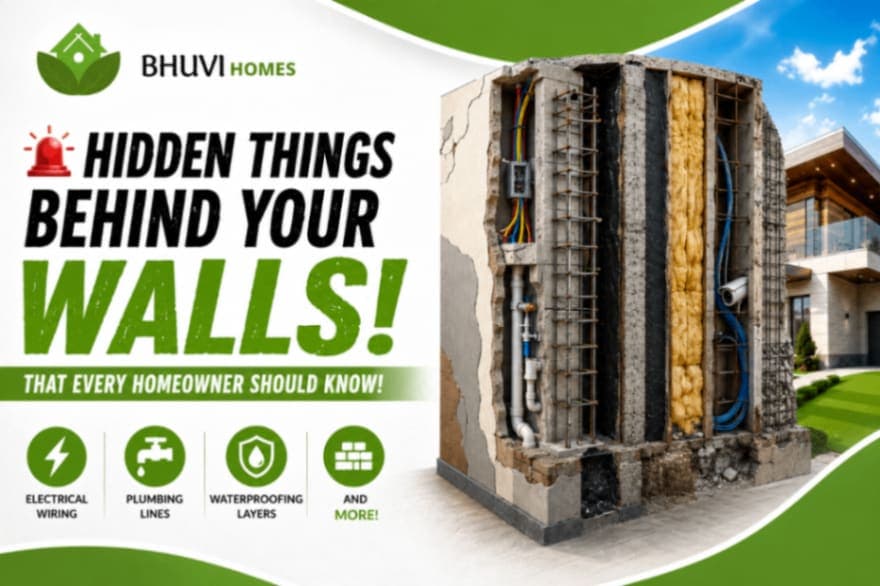
🚨 Hidden Things Behind Your Walls That Every Homeowner Should Know!
Introduction
When we look at a beautifully painted wall, we usually see only the final finish. But what lies behind that wall is what truly determines the safety, comfort, durability, and functionality of your home.
Many homeowners focus on flooring, paint colors, and interior design while overlooking the hidden systems working silently behind the walls. These unseen components are the backbone of every well-constructed home. If they are planned and installed correctly, your house remains safe and problem-free for years. If not, they can lead to expensive repairs, water damage, electrical hazards, and structural issues.
Let's uncover the hidden elements behind your walls that every homeowner should know before building their dream home.
🔍 Key Components Hidden Behind Your Walls
⚡ 1. Electrical Wiring
Electrical wiring is one of the most important systems concealed within your walls. It powers everything from lighting and fans to appliances and smart home devices.
Why It Matters
Ensures safe power distribution throughout the home.
Prevents electrical short circuits and fire hazards.
Supports future electrical upgrades and smart technologies.
Reduces maintenance costs when installed correctly.
A poorly planned wiring system can create serious safety risks and increase long-term repair expenses.
🚰 2. Plumbing Lines
Water supply pipes and drainage lines are often hidden within walls to maintain a clean and modern appearance.
Why It Matters
Provides smooth water flow to kitchens and bathrooms.
Prevents water leakage and seepage.
Protects interior finishes from moisture damage.
Enhances the overall efficiency of your plumbing system.
Even a small hidden leak can cause significant structural and interior damage over time.
🏗️ 3. Structural Columns and Beams
Columns and beams form the structural skeleton of a building. While many are hidden inside walls, they carry the entire load of the structure.
Why It Matters
Supports the building safely.
Transfers loads to the foundation.
Improves earthquake resistance.
Prevents cracks and structural failures.
Never compromise on structural design, as it directly impacts the safety and lifespan of your home.
💧 4. Waterproofing Layers
Waterproofing is often applied behind walls, especially in bathrooms, balconies, kitchens, and external walls.
Why It Matters
Prevents water seepage.
Protects paint and plaster from damage.
Stops mold and fungal growth.
Increases the life of the building.
Proper waterproofing today can save thousands in future repair costs.
🌡️ 5. Insulation Materials
Insulation materials are installed inside walls to improve thermal and acoustic comfort.
Why It Matters
Keeps indoor temperatures comfortable.
Reduces energy consumption.
Minimizes outside noise.
Creates a more comfortable living environment.
Modern homes increasingly use insulation to improve efficiency and sustainability.
📹 6. Internet, CCTV & Smart Home Cables
Today's homes require more than just electrical wiring. Internet cables, CCTV connections, intercom systems, and smart automation wiring are also hidden inside walls.
Why It Matters
Supports high-speed internet connectivity.
Enables home security systems.
Improves property value.
Allows future smart home upgrades.
Planning these systems during construction avoids expensive wall modifications later.
🔩 7. Wall Reinforcement and Mesh
Reinforcement mesh and crack-resistant materials are often installed within walls and plaster layers.
Why It Matters
Reduces wall cracks.
Improves structural stability.
Enhances plaster durability.
Maintains a smooth finish for years.
This small detail often makes a big difference in long-term wall performance.
⚠️ 8. Hidden Defects Caused by Poor Construction
Not everything hidden behind walls is good. Poor workmanship can leave serious defects that remain unnoticed until major problems appear.
Common hidden issues include:
Low-quality wiring
Improper pipe joints
Inadequate waterproofing
Weak structural reinforcement
Poor-quality construction materials
Why It Matters
These hidden defects can lead to:
Costly repairs
Water leakage
Electrical failures
Structural damage
Reduced property value
This is why choosing a trusted and transparent construction partner is critical.
🤔 Why Should Every Homeowner Know What's Behind Their Walls?
Most homeowners only see the finished product, but understanding what lies behind the walls helps you make informed decisions during construction.
When you know what's being installed:
You can verify construction quality.
You can avoid shortcuts and hidden compromises.
You gain confidence in your investment.
You reduce future maintenance expenses.
You ensure your family's safety and comfort.
Remember: A beautiful home is not defined by what you can see—it is defined by the quality of what you cannot see.
🏡 Conclusion
The hidden systems behind your walls are the true foundation of a safe, durable, and comfortable home. From electrical wiring and plumbing to structural supports and waterproofing, every component plays a crucial role in your home's long-term performance.
A house may look beautiful on the outside, but its real strength comes from the quality of construction hidden within. That's why homeowners should always prioritize transparency, quality materials, and professional construction practices.
Before building your dream home, make sure you know exactly what's going behind your walls—because the things you can't see are often the things that matter most.
📢 Build With Transparency. Build With Confidence.
At Bhuvi Homes, we believe every homeowner deserves complete transparency throughout the construction journey.
✅ Premium Quality Materials
✅ Structural Safety Assurance
✅ Professional Engineering Standards
✅ Transparent Construction Process
✅ Regular Project Updates
✅ No Hidden Surprises
🏠 Planning your dream home?
Contact Bhuvi Homes today and discover how quality construction starts with what you can't see.
📞 Book a Free Consultation Today!
🌐 Visit: bhuvihomes.in
📍 Building Trust. Building Dreams. Building Homes.
❓ Frequently Asked Questions (FAQs)
Q1. Why is electrical wiring hidden inside walls?
Electrical wiring is concealed for safety, aesthetics, and protection from environmental damage.
Q2. Can hidden plumbing leaks damage a house?
Yes. Even small leaks can cause seepage, mold growth, wall damage, and expensive repairs.
Q3. What is the purpose of waterproofing behind walls?
Waterproofing prevents moisture penetration and protects the building structure from water-related damage.
Q4. Why are columns and beams important?
Columns and beams support the building's load and ensure structural stability and safety.
Q5. How can homeowners ensure quality construction?
By choosing a trusted builder, inspecting materials, requesting regular updates, and maintaining transparency throughout the project.
Q6. Is it worth investing in insulation materials?
Yes. Insulation improves comfort, reduces energy bills, and enhances overall living quality.
Q7. Why should smart home cables be planned during construction?
Installing them during construction avoids future wall cutting and reduces installation costs.
Q8. What is the biggest risk of poor-quality hidden construction?
The biggest risks include structural issues, water damage, electrical hazards, and high maintenance costs.