
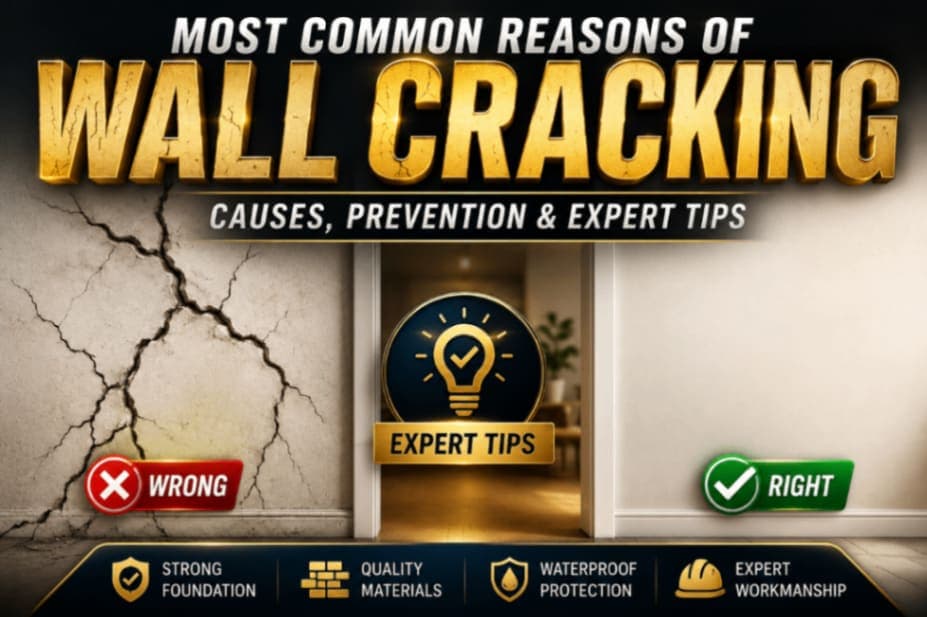
Most Common Reasons for Wall Cracking in New Homes 🏡💥
Owning a new home is a milestone — a blend of pride, comfort, and security. Yet, nothing alarms homeowners more than cracks appearing on freshly plastered walls. While some cracks are cosmetic, others may indicate serious structural concerns. Understanding the primary causes of wall cracking helps protect your investment and ensures long-term durability.
Here’s a detailed exploration of the most common reasons for wall cracking in new homes.
1️⃣ Foundation Settlement & Differential Movement 🌍⚖️
Uneven soil compaction beneath the foundation is the most prevalent cause of wall cracks. Newly constructed homes often face differential settlement, which stresses the walls and structural elements.
Key Factors:
Poorly compacted soil or fill
Expansive or clayey soils prone to swelling/shrinkage
Water infiltration weakening soil structure
Crack Pattern: Typically diagonal or vertical cracks around corners of doors and windows.
Pro Tip: Proper geotechnical soil testing and foundation reinforcement can significantly reduce this risk. ✅
2️⃣ Shrinkage Cracks from Improper Concrete Curing 💧🏗️
Concrete and mortar gain strength gradually. Rapid drying or inadequate curing can trigger shrinkage cracks.
Causes:
Rushed construction schedules
Exposure to high temperatures or direct sunlight
Insufficient water curing
Impact: Weakens structural integrity and can cause both surface and deep cracks.
3️⃣ Inferior Quality Construction Materials 🧱❌
Using substandard bricks, cement, sand, or mortar compromises wall durability.
Indicators of Material Deficiency:
Low-grade cement
High sand content reducing bonding strength
Uneven or weak brick quality
Result: Premature cracking, plaster detachment, and increased maintenance costs.
4️⃣ Thermal Expansion & Contraction ☀️❄️
Buildings constantly expand in heat and contract in cold. Without expansion joints, this cyclical stress leads to wall cracking.
Common Signs:
Horizontal or zigzag cracks on exterior walls
Terrace parapet and sun-facing wall fractures
Insight: Proper architectural detailing with expansion joints mitigates thermal stress.
5️⃣ Structural Design Flaws 📐🛠️
Improper engineering or load mismanagement can directly contribute to wall cracking.
Potential Deficiencies:
Under-reinforced beams or columns
Incorrect load-bearing wall placement
Overloaded slabs or floors
Warning: Structural cracks pose a serious risk and require immediate professional assessment. ⚠️
6️⃣ Moisture Ingress & Water Damage 💦🚿
Water infiltration is a silent enemy, weakening plaster and concrete over time.
Sources of Moisture:
Leaking plumbing or pipes
Terrace leakage
Bathroom or kitchen waterproofing failures
Effects: Damp patches, paint blistering, efflorescence, and widening cracks.
7️⃣ Substandard Plastering & Workmanship 🎨🧰
Even minor craftsmanship errors can manifest as plaster cracks.
Common Triggers:
Excessive plaster thickness
Improper cement-sand ratio
Rapid drying of plaster
Cosmetic cracks are repairable, but recurring cracks may indicate underlying structural stress.
8️⃣ Vibration & External Disturbances 🚧🔊
Nearby construction activity, heavy traffic, or excavation can transfer vibrations into your building, causing hairline or corner cracks.
Tip: Monitoring and structural inspection is crucial in rapidly developing urban zones.
💡 Prevention Tips for Wall Cracks
Conduct professional soil testing before construction 🌱
Use premium-quality materials and proper mix ratios 🧱
Ensure adequate curing for concrete and plaster 💧
Apply effective waterproofing on terraces and wet areas 💦
Hire experienced structural engineers & architects 📐
Install expansion joints to counter thermal stress 🌡️
Prevention is always better than costly repairs. A structurally sound home ensures peace of mind for decades.
FAQs – Most Common Wall Cracking Queries ❓🏠
Q1: Are wall cracks in new homes normal?
✅ Minor hairline cracks due to plaster shrinkage or natural settling are normal. Wide or deep cracks may indicate structural issues.
Q2: Which cracks are dangerous?
⚠️ Structural cracks are typically:
Wider than 5 mm
Diagonal or zigzag
Near foundations, columns, or beams
Q3: Does soil type affect wall cracks?
🌍 Absolutely. Weak or expansive soils can cause uneven foundation settlement, leading to cracks.
Q4: Do wall cracks affect property value?
💰 Yes. Visible cracks reduce buyer confidence and may lower property valuation.
Q5: Can water leakage cause wall cracks?
💦 Continuous moisture weakens plaster and concrete bonding, creating cracks, damp patches, and paint peeling.
Q6: How to prevent cracks in a new home?
✔️ Proper soil testing
✔️ High-quality materials
✔️ Correct concrete curing
✔️ Waterproofing measures
✔️ Skilled engineers & architects
Q7: When should I consult a structural engineer?
📞 Immediately if cracks are expanding, doors/windows misalign, or walls start bulging. Early evaluation prevents expensive future repairs.
Final Thoughts ✨
Wall cracking is one of the most common challenges in newly constructed homes, but most causes are predictable and preventable. The key lies in quality construction, precise engineering, and regular inspection.
A durable, crack-free home isn’t just built with bricks and cement — it’s built with expertise, foresight, and meticulous craftsmanship. 🏡💎
contact us today,
to make your dream home.